Retail After Abundance
In the past decade, retail real estate has been repeatedly declared dead — and yet, it has survived and evolved. What’s emerged is a sector less grand, less uniform, and far more selective. The age of usefulness has replaced the age of abundance, prioritizing location quality, tenant mix, and adaptability over size.
Today, retail is no longer a monolithic asset class, but a collection of micro-strategies.
The old model relied on big boxes, big malls, big parking lots, and even bigger assumptions about automatic footfall. That logic depended on predictable commutes, steady suburban growth, and consumers willing to browse. As these conditions have faded, a more demanding customer and a more disciplined landlord have taken their place.
“Retail no longer succeeds by being present everywhere at once. It succeeds by being intentional — offering curated experiences, right-sized spaces, and locations that justify their relevance every day. The future of retail real estate isn’t about how much space you control, but how effectively that space functions.”
– Jeff Pollak
In the United States, retail vacancy has remained near historic lows — around 4.9% in mid-2025 according to CBRE. Developers have constrained new construction, while owners continue to remove underperforming properties through closures and conversions. The result is a market that feels tight in aggregate but fragile in detail. Some landlords command premium rents for prime locations, while others struggle to lease outdated space.
This divergence has made location strategy more critical than ever. Properties at the intersection of density, access, and daily life are increasingly the ones that pull ahead.
The End of the Average
→ Retail’s central problem is not that consumers stopped shopping — it’s that they stopped shopping everywhere.
Online retail now accounts for roughly one-sixth of total U.S. sales, and an even larger share in categories like apparel and electronics. Physical stores, however, have not vanished. Instead, they’ve been sorted by the market. Locations that serve daily needs or offer a clear value proposition, such as grocery, discount, fitness, and food, continue to perform, while those built around comparison shopping, discretionary browsing, or office-driven foot traffic struggle. This divide helps explain why grocery- and discount-anchored centers are often fully leased, while malls sit empty. The enclosed mall was designed for a commuting economy and a culture of browsing, neither of which is guaranteed today.
What survives in retail are extremes: necessity-driven centers that function like infrastructure and flagship destinations that offer experiences difficult to replicate online. Everything in between is being repurposed, subdivided, or phased out.
Scarcity Changes the Landlord
→ Low vacancy has reshaped leasing habits. With limited supply, landlords can no longer rely on churn alone to improve returns. Each leasing decision shapes traffic, co-tenancy, and perception.
Adaptability has become as important as creditworthiness. Retailers that function as fulfillment nodes, return centers, or consistent drivers of foot traffic hold greater value than those that simply occupy space. In this environment, property strategy begins to resemble urban planning, with carefully curated tenant mixes designed to reinforce daily patterns of use.
Streetsense distinguishes between market-serving retail, which meets daily needs, and market-making retail, which creates destinations through coordinated tenancy. Centers attempting both often underperform.
Control is the New Luxury
→ In the old retail world, location was everything. Today, control has become equally important.
Retailers seek environments that align with their brand and benefit from complementary neighbors, something difficult to achieve in fragmented ownership structures.
Control also requires patience — owners who can absorb downtime are better positioned to curate thoughtfully, prioritizing long-term identity over short-term occupancy. Those under pressure to lease quickly often sacrifice durability for immediacy.
Civic Capital Steps In
→ Where private capital lacks flexibility, public or quasi-public ownership can play a stabilizing role.
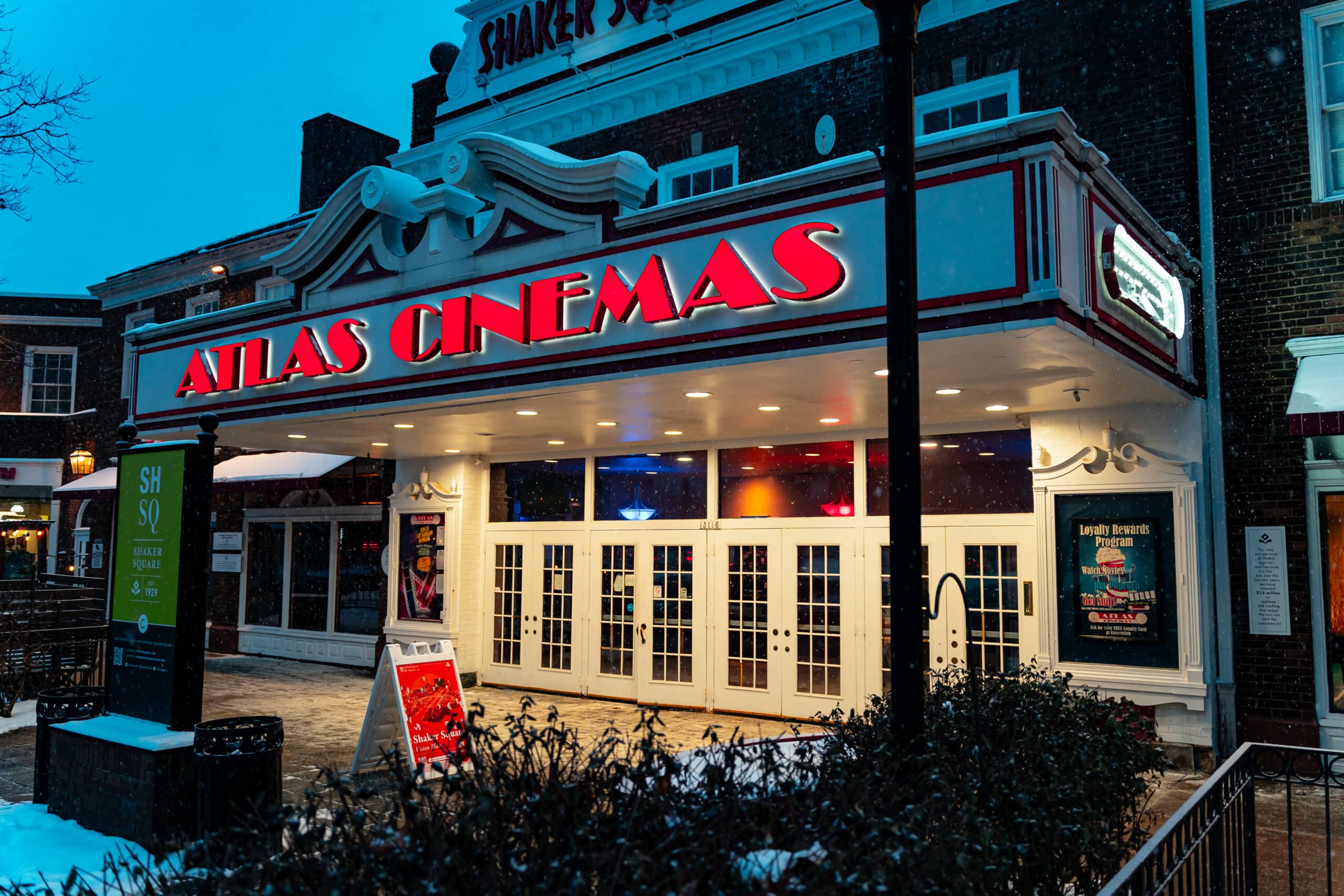
Shaker Square in Cleveland illustrates this shift. After facing foreclosure in the early 2020s, the historic retail district was acquired by nonprofit developers with support from the city, enabling a longer-term, community-focused approach. Rather than prioritizing rent maximization, leasing strategy focused on relevance and identity, positioning retail as a form of civic policy.
While still uncommon, this model reflects a broader reality: some retail assets now require patient capital and public-minded stewardship to remain viable.
Rents Rise Quietly
→ Retail rents have risen modestly but unevenly.
Prime suburban districts have often outperformed downtown corridors, where recovery remains inconsistent. In strong locations, tenants will pay for traffic and stability. Elsewhere, landlords rely on concessions, shorter terms, or capital improvements to secure occupancy.
Higher interest rates and costs have also reshaped redevelopment math, pushing many owners toward faster-payback upgrades rather than large conversions. Store closures still dominate headlines, but they tell only part of the story. Closures have outpaced openings by store count in 2024 and into 2025, yet openings and expansions still absorb substantial square footage and overall availability remains tight. The result is churn, not disappearance. If retail is becoming infrastructure rather than spectacle, the question becomes: who will pay to maintain it and on what terms?
Geography Still Matters
→ Retail follows people.
Migration, household formation, and income growth shape demand more reliably than sentiment. Sun Belt metro areas with growing populations attract investment while suburbs with young families support grocery-anchored centers. Aging regions struggle. Downtowns face a distinct challenge. Remote work has reduced weekday populations, undermining retail originally built around office traffic. Some cities have responded with residential conversions, zoning flexibility, and public realm investment. Where residential density is lacking, strategy becomes defensive — shorter hours, reduced space, or conversion to non-retail uses. The future of downtown retail depends on a permanent population.
When office buildings convert to housing, ground-floor retail must align with daily life. Residential foot traffic spans mornings, evenings, and weekends, rewarding usefulness over spectacle. Well-activated ground floors should support density, safety, and street life, giving residential conversions a better chance of aging well.
The Store is a Node
→ For retailers, property strategy is now inseparable from logistics and marketing.
Stores are no longer judged solely by profitability. They are evaluated as nodes in a network, supporting delivery, returns, and brand visibility. A store may justify its rent even if in-store sales are modest. This logic explains why digitally native brands continue to open physical locations. The store becomes part showroom, part billboard, part warehouse.
This model favors flexible spaces with strong access and back-of-house capacity and challenges ornate but constrained locations. With landlords seeking commitment, the compromise often lies in performance clauses and shared upside.
Leasing Becomes Storytelling
→ As retail becomes more selective, leasing becomes more persuasive.
Modern leasing materials increasingly resemble investment decks, grounded in data, but centered on a clear vision. They articulate demographics, spending patterns, and psychographics, while showing how each tenant fits into a broader ecosystem. This reflects growing competition.
In strong markets, landlords compete for the right tenants. In weaker ones, they compete for relevance. In both cases, narrative matters. Leasing aligns stakeholders, signals intent, and filters for tenants who understand context.
The Quiet Reinvention
The retail real estate industry is learning how to operate within this new framework, adapting to a model defined less by scale than by precision and long-term thinking. It is becoming more disciplined, more selective, and more attuned to how people actually live and move. The question that remains is whether its investors are prepared to do the same.
BACK TO LATEST